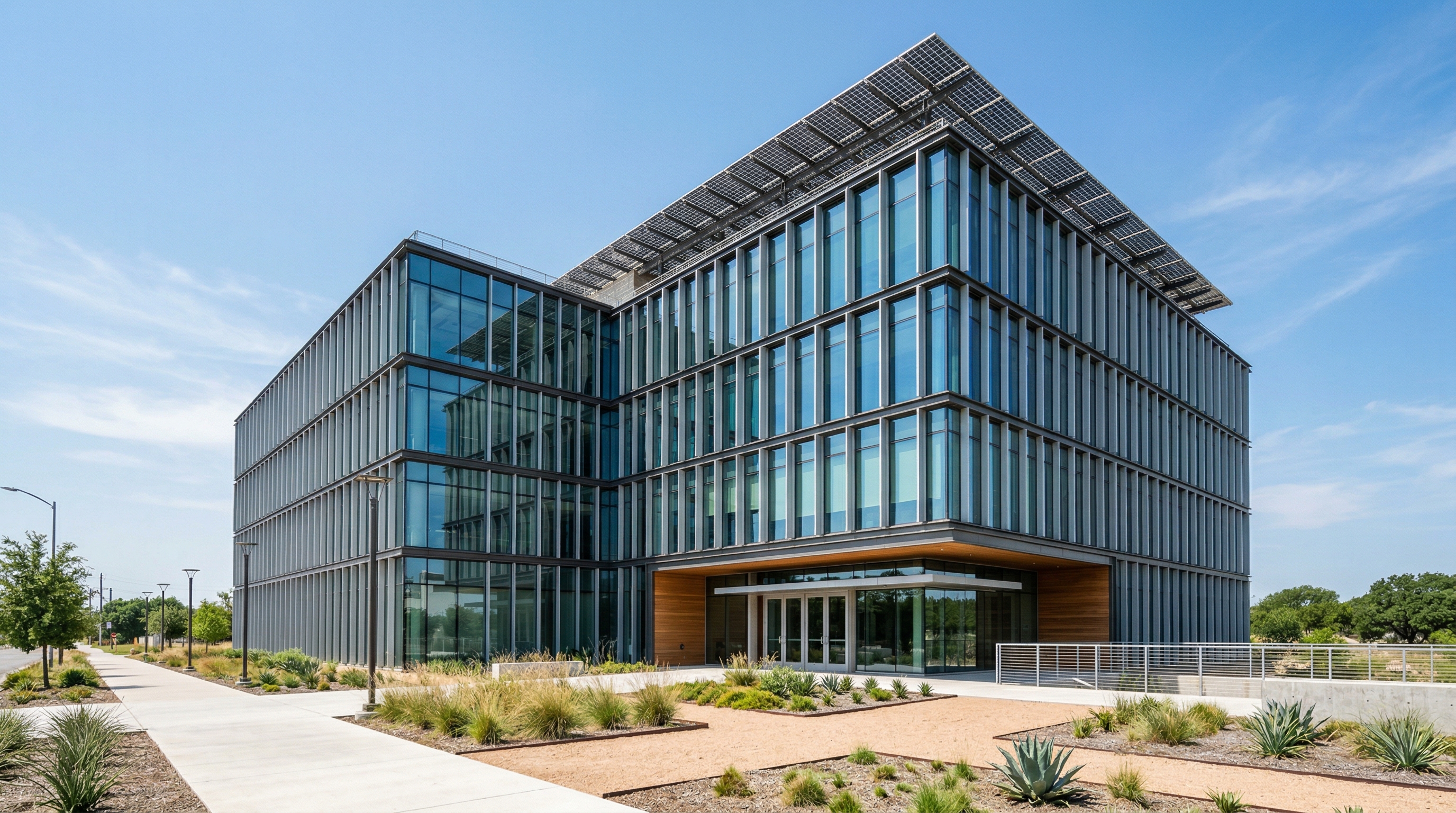
A commercial building that misses its performance targets rarely fails because of one dramatic mistake. More often, it underperforms through a series of small gaps - glazing that gains too much heat, mechanical systems that fight the envelope, controls that are never fully commissioned, and design decisions made without construction reality in mind. An energy efficient commercial building avoids that pattern by treating performance as a coordinated system from day one.
What Defines an Energy Efficient Commercial Building
An energy efficient commercial building is designed and built to minimize wasted energy while maintaining comfort, durability, and operational reliability. That sounds straightforward, but true performance depends on how well the major systems work together. The building envelope, mechanical systems, lighting, controls, orientation, and occupancy patterns all influence the result.
The strongest projects begin with measurable targets. Owners who define clear goals around energy use, indoor comfort, lifecycle cost, and maintenance performance create a far more disciplined project. That is where high-performance construction begins.
This is also where trade-offs enter the conversation. More glass may support branding and daylight, but it can increase solar gain. A tighter envelope can improve efficiency dramatically, but it must be paired with proper ventilation and moisture management. Smart decisions come from balancing first cost, lifecycle value, and building function rather than chasing a single metric.
Why Energy Efficiency Matters for Commercial Buildings
Commercial buildings account for a significant portion of energy consumption across Texas. For business owners and developers in Burkburnett and Wichita County, reducing operational energy costs is not just an environmental goal - it is a direct impact on the bottom line. Energy-efficient construction pays dividends for the life of the building.
For owners and developers, that distinction matters. Energy efficiency is not just about reducing utility bills. It affects operating costs, tenant comfort, equipment life, maintenance demands, and the long-term market value of the asset. In Texas and Oklahoma, where climate loads are significant and building use can be intense, these decisions shape performance for decades.
The Building Envelope as the First Defense
Energy efficiency starts with the building envelope. Walls, roof, and foundation must work together to minimize heat transfer. In the Texas climate, this means high R-value insulation, thermal break details, and airtight construction. Our ICF (Insulated Concrete Form) building envelopes deliver superior thermal performance compared to conventional framing.
In warm and mixed climates, the envelope is one of the biggest determinants of energy use. Roof assemblies, wall insulation, air sealing, window selection, and shading strategies directly affect how hard the mechanical system has to work. If the envelope is weak, even premium HVAC equipment will spend its life compensating for losses it should never have had to absorb.
Glazing requires the same level of discipline. Large window areas can create a strong visual statement, but glass specification has to respond to orientation, solar heat gain, visible light transmission, and local climate conditions. East- and west-facing exposures often demand more control than owners initially expect. Better glass can improve performance significantly, but placement and shading are just as important as the product itself.
Mechanical Systems Optimization
Even the most efficient building envelope loses its advantage with an oversized or poorly designed HVAC system. Right-sizing mechanical equipment, designing effective distribution systems, and integrating controls are essential steps. Our team designs HVAC systems that match the actual load of the building rather than relying on rules of thumb.
There is no single best HVAC solution for every project. Variable refrigerant flow systems can offer excellent zoning flexibility in some applications. Dedicated outdoor air systems can improve ventilation control. High-efficiency rooftop units may be practical in certain commercial formats. Hydronic systems may deliver strong long-term performance in the right building type. The correct answer depends on use case, maintenance capability, budget, and the sophistication of operations after turnover.
Controls are equally important. A well-designed system without effective controls will drift from peak performance quickly. Scheduling, setback strategies, occupancy sensors, demand response capability, and ongoing calibration all influence whether projected savings become real savings.
Airtight Construction Techniques
Air leakage is the enemy of energy efficiency. A commercial building with poor air sealing loses conditioned air continuously, driving up energy costs and creating comfort problems. Our construction techniques prioritize continuous air barriers, properly sealed penetrations, and tested envelope performance.
Air leakage is especially costly because it often goes unnoticed until occupancy. Uncontrolled infiltration can introduce heat, humidity, dust, and pressure imbalances that undermine both comfort and efficiency. That is why envelope detailing matters at transitions, penetrations, roof-to-wall connections, and around openings. Precision at these points is not cosmetic. It is operational.
Daylighting and Passive Design
Strategic window placement, shading devices, and building orientation can dramatically reduce lighting loads and cooling demand. Our architectural team in Burkburnett integrates passive design strategies from the earliest design phases.
Owners sometimes focus heavily on insulation and HVAC while underestimating internal loads. In many commercial buildings, lighting, equipment, and occupant behavior account for a meaningful portion of energy consumption. LED lighting has become standard for good reason, but fixture selection, layout, daylight integration, and controls still deserve careful attention.
The goal is not just to install efficient fixtures. It is to deliver the right light levels, reduce unnecessary runtime, and support the actual function of the space. Warehouses, offices, hospitality environments, and healthcare spaces all require different lighting strategies. Performance improves when design follows use instead of defaulting to generic layouts.
The Carbonless Framework
Our Carbonless methodology provides a systematic approach to reducing both embodied carbon (in materials) and operational carbon (from energy use). Commercial clients across Texas benefit from buildings that meet or exceed current energy codes while supporting sustainability goals.
Integrated design-build delivery addresses fragmentation directly. When architectural design, engineering coordination, construction execution, and project management operate under one accountable structure, energy goals are easier to protect. Envelope details can be reviewed with field realities in mind. Mechanical strategies can be coordinated against actual assemblies and schedules. Owners get clearer communication and fewer disconnects between concept and completion.
For clients pursuing a high-performance asset, that alignment is not a convenience. It is a control mechanism. Visionary Building Services approaches project delivery with this unified model because long-term building performance depends on precise coordination, not isolated decisions made in separate silos.
Cost Matters, But Lifecycle Value Matters More
Every owner asks the same practical question: what is the return? The honest answer is that it depends on the building type, operating schedule, utility rates, lease structure, and hold period. Some energy investments pay back quickly. Others create value through durability, tenant retention, lower maintenance, and stronger resale positioning rather than immediate utility savings alone.
This is why first-cost analysis can be misleading. A cheaper envelope or lower-grade system may reduce initial budget pressure, but it can create years of avoidable operating expense. On the other hand, not every premium product is justified. The best investments are the ones that align with the asset's mission, expected lifespan, and operational model.
Owners who plan to hold a building long term usually benefit from taking a broader view. Better assemblies, stronger commissioning, and more thoughtful system integration often produce compounding returns. Even for developers with shorter horizons, a building with lower projected operating costs and stronger comfort performance can be more attractive to tenants and buyers.
What Owners Should Ask Before Design Begins
Before the first concept is finalized, owners should be clear about a few things. They should know how the building will be used, how intensively it will be occupied, what comfort standards matter most, and how the asset will be operated after turnover. They should also define whether the priority is lowest first cost, strongest lifecycle performance, or a strategic balance of both.
Those answers influence every major decision that follows. They shape orientation, envelope design, glazing ratios, HVAC selection, controls strategy, and commissioning scope. They also create accountability. When project teams are aligned around measurable goals early, performance is far less likely to erode during value engineering or construction.
A high-performance commercial building is not created by one product, one specification, or one marketing label. It is built through disciplined coordination, technical precision, and a clear commitment to long-term results. For owners who want a building that works as hard as their business does, energy efficiency is not an add-on. It is a foundational design decision that keeps delivering long after the ribbon cutting.
Powered by Carbonless Methodology
Three decades of design-build mastery, utilizing carbonless materials and low-carbon methods for high-performance builds.
From the first sketch to the final handshake, we provide a full suite of building solutions centered on high performance. crafting the future, building for today.
Visionary Building Services LLC
Burkburnett, Texas