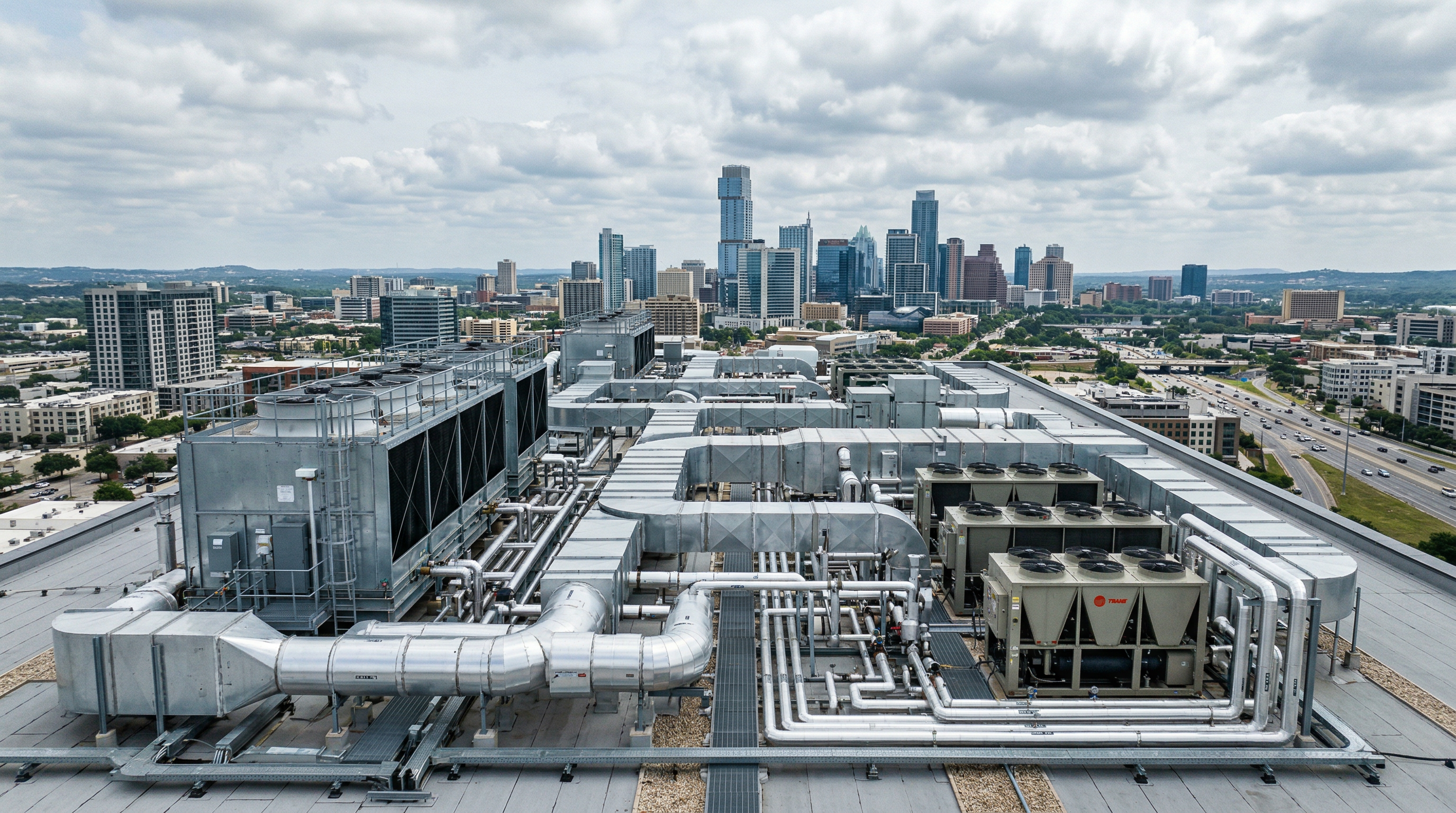
A building can look exceptional on paper and still underperform the moment people move in. Comfort complaints, uneven temperatures, humidity issues, rising utility costs, and premature equipment wear usually trace back to one decision point: mechanical systems design for buildings.
For owners and developers, that makes mechanical design far more than a technical line item. It is a performance strategy. The right system supports occupant comfort, protects the building envelope, controls operating costs, and gives the project a longer, more dependable service life. The wrong system can create years of avoidable inefficiency, maintenance burden, and operational friction.

Mechanical Systems That Work With Your Building
In high-performance construction, mechanical systems and the building envelope must be designed as an integrated system. An efficient envelope reduces the load on mechanical systems, which allows right-sized equipment that operates more efficiently and lasts longer. Our team in Burkburnett, Texas designs mechanical systems specifically for the buildings we construct.
Early coordination changes the outcome. It allows the architectural form, structural approach, envelope strategy, and HVAC concept to work as one system. That matters in Texas and Oklahoma, where long cooling seasons, high outdoor temperatures, humidity swings, and intense solar gain can expose weak coordination quickly. High-performance buildings are not defined by oversized equipment. They are defined by balance.
HVAC System Design and Sizing
Proper HVAC sizing begins with accurate load calculations. We perform Manual J residential load calculations and comparable commercial calculations to determine the actual heating and cooling loads for every project. This prevents the common problem of oversized equipment that short-cycles, wastes energy, and fails to control humidity in the Texas climate.
Systems should be sized from the building's actual loads, not rules of thumb or assumptions borrowed from another project. Window area, orientation, insulation levels, occupancy, lighting, equipment gains, air leakage, and ventilation requirements all affect capacity. The goal is not maximum tonnage. The goal is accurate performance.
Key Principle
Oversized equipment short-cycles, reducing efficiency, weakening humidity control, and increasing wear. Undersizing has obvious consequences during peak summer conditions. Precision sizing is the only answer.
Distribution System Design
Even a properly sized piece of equipment performs poorly with a poorly designed duct system. Our mechanical design includes duct sizing calculations, layout optimization for balanced airflow, and sealing specifications to minimize duct leakage. For high-performance projects, we often specify duct systems located within conditioned space to eliminate the energy penalty of ductwork in unconditioned attics.
This becomes especially important in offices, mixed-use buildings, custom homes, and facilities with varying occupancy patterns. Conference rooms, private offices, open work areas, kitchens, and large-volume spaces do not behave the same way. Good design accounts for those differences instead of treating the building like a single uniform box.
Ventilation and Indoor Air Quality
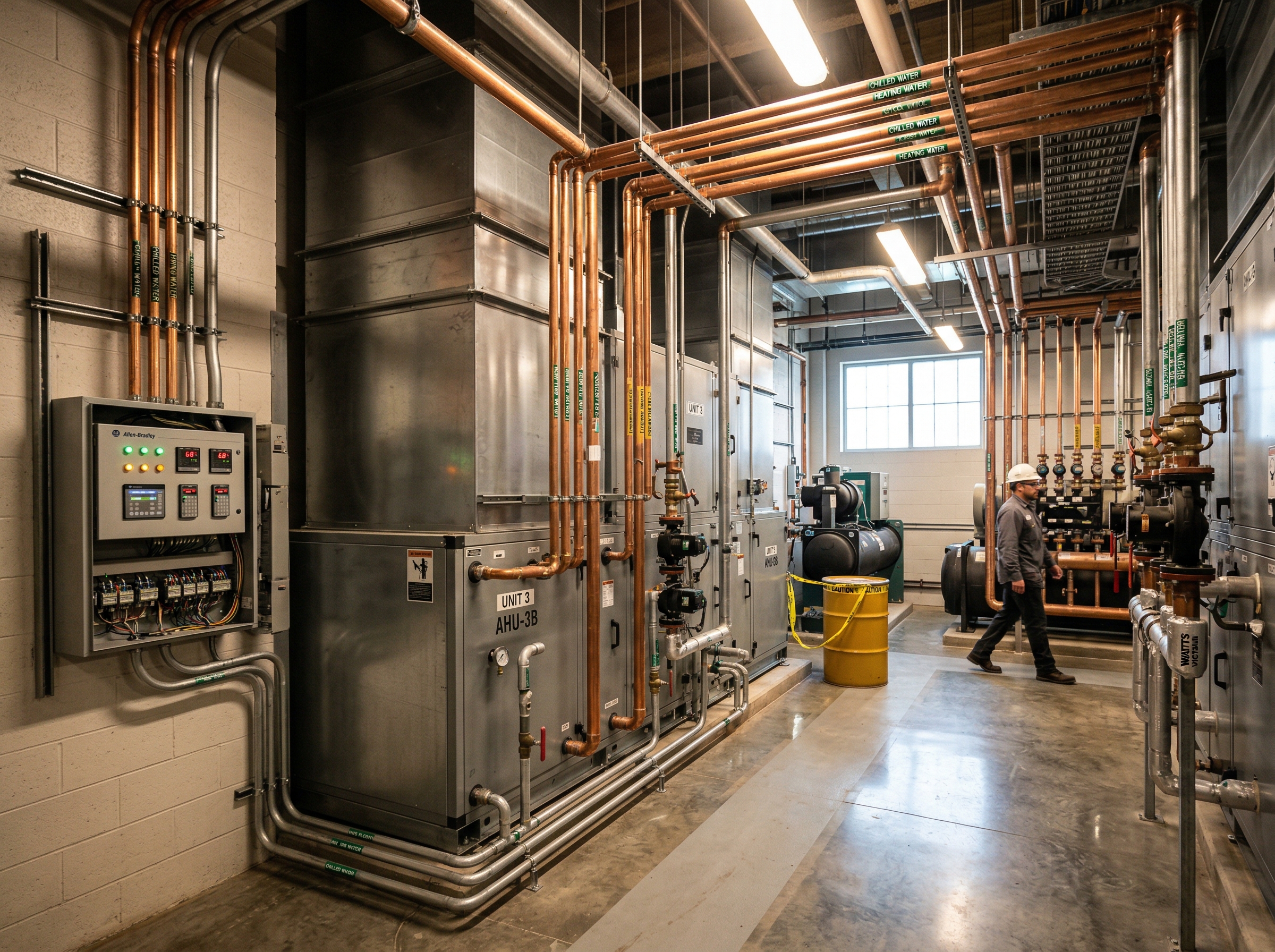
Controlled mechanical ventilation is essential in airtight high-performance buildings. We design ventilation systems that deliver the right amount of fresh air to each space, filtered and conditioned for comfort and health. Energy recovery ventilation (ERV) systems recapture energy from exhaust air, maintaining indoor air quality without sacrificing efficiency.
In warm climates, sensible cooling alone is not enough. Moisture control protects occupant comfort, finish materials, indoor air quality, and the durability of the overall structure. If humidity is not managed correctly, the building can feel uncomfortable even when the thermostat appears to be set properly. Equipment selection, ventilation strategy, control sequences, and envelope performance must be considered together.
Manual J and commercial load calculations for precise equipment sizing based on your building's actual conditions.
Optimized duct sizing and layout for balanced airflow throughout every zone, minimizing leakage and energy loss.
Energy recovery ventilation recaptures exhaust energy to maintain air quality without compromising efficiency.
Integrated moisture management strategies that protect comfort, finishes, and long-term structural durability.
Controls and Automation
Modern mechanical systems benefit from intelligent controls that respond to occupancy, outdoor conditions, and utility pricing signals. We specify and integrate control systems appropriate to the project scale, from simple programmable thermostats in residential projects to sophisticated building automation systems in commercial buildings across Texas.
Even a well-designed HVAC system can underperform if sequences are poorly defined or if controls are overly complex for the operator. Buildings need systems that are sophisticated enough to perform well and practical enough to be used correctly. Controls should be an asset, not a liability.
Commissioning and Performance Verification
Mechanical systems must be commissioned - tested and adjusted - to verify they perform as designed. Our construction process includes commissioning of all mechanical systems before project completion. This step catches installation errors and ensures that the performance we promised is the performance you receive.
An integrated design-build approach closes coordination gaps. Mechanical decisions can be tested against budget, schedule, installation realities, and long-term operation while the design is still flexible. That leads to better equipment placement, cleaner routing, stronger coordination with structural and architectural systems, and more confidence in the finished result.
Choosing the Right System for Your Project
There is no single best HVAC system for every project. Variable refrigerant flow, rooftop units, split systems, chilled water systems, dedicated outdoor air systems, and heat pump configurations each have strengths and limitations.
For some buildings, decentralized equipment offers flexibility and lower first cost. For others, central systems provide better control, energy performance, and long-term serviceability. The right choice depends on scale, use type, energy goals, zoning complexity, maintenance strategy, and capital planning.
This is where experienced engineering judgment matters. Owners do not need more product noise. They need a system selected for the building they are actually constructing, the climate it will face, and the performance standard they expect to maintain.
What Owners Should Expect from High-Performance Design
Strong mechanical systems design should produce measurable results. Occupants should experience consistent comfort. Operators should have a system that is understandable and maintainable. Energy use should align with the building's design intent rather than drift upward because of poor coordination or oversized equipment.
Buildings with disciplined mechanical design tend to hold performance better over time because they begin with a more coherent relationship between envelope, systems, and use patterns. That is especially important for owners planning to hold an asset for many years or position it as a premium property in a competitive market.
At its best, mechanical design protects the investment from both visible and hidden losses. It reduces wear, limits moisture risk, improves indoor conditions, and supports a more predictable operating profile. The most successful projects treat mechanical systems as part of the building's core intelligence, not an afterthought hidden above the ceiling.
Serving Burkburnett and the Texas Region
Our mechanical systems design expertise serves residential and commercial clients in Burkburnett, Wichita County, and across Texas and Oklahoma. Whether you are building a custom home or a commercial facility, our integrated design-build approach delivers mechanical systems that perform.
Published by
Visionary Building Services LLC
Three decades of design-build mastery, utilizing carbonless materials and low-carbon methods for high-performance builds.