The Building Envelope as Performance Foundation
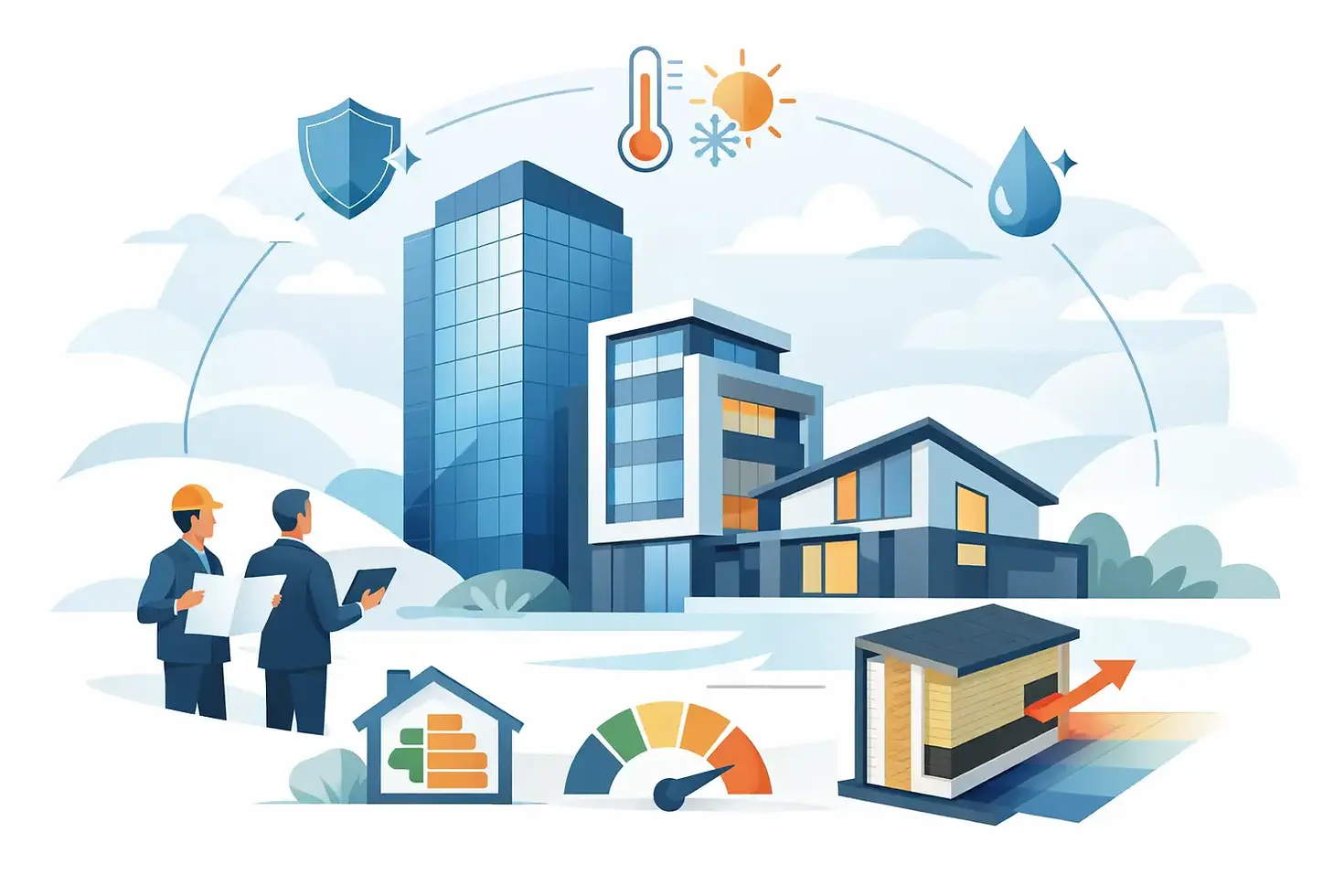
The building envelope - walls, roof, foundation, windows, and doors - is the primary interface between interior conditioned space and the outdoor environment. A well-designed envelope controls heat flow, air movement, moisture, and sound. In the Texas climate of Burkburnett and Wichita County, envelope performance is critical to occupant comfort and energy efficiency.
A building rarely fails all at once. More often, performance slips through the envelope first - rising energy bills, moisture intrusion, comfort complaints, premature material wear, and systems working harder than they should. That is why building envelope design services matter so much. They define how the roof, walls, windows, insulation, air barriers, and waterproofing assemblies work together to protect the structure and support long-term building performance.
20 to 40%
Energy savings demonstrated on ICF projects in Texas compared to conventional frame construction.
ICF Building Envelopes
Insulated Concrete Form (ICF) construction is one of the highest-performing envelope systems available. ICF walls consist of expanded polystyrene (EPS) foam forms filled with reinforced concrete, creating a wall with exceptional thermal mass, high R-value, and structural strength.
Our ICF projects in Texas demonstrate consistent energy savings of 20 to 40 percent compared to frame construction. The thermal mass of the concrete core moderates indoor temperature swings, reducing peak HVAC loads and improving year-round comfort in the demanding Texas climate.
Beyond energy performance, ICF walls offer superior resistance to wind, fire, and impact - a meaningful advantage in regions subject to severe weather events. The integrated insulation and structural system also simplifies the construction sequence and reduces the number of trades and coordination points required.
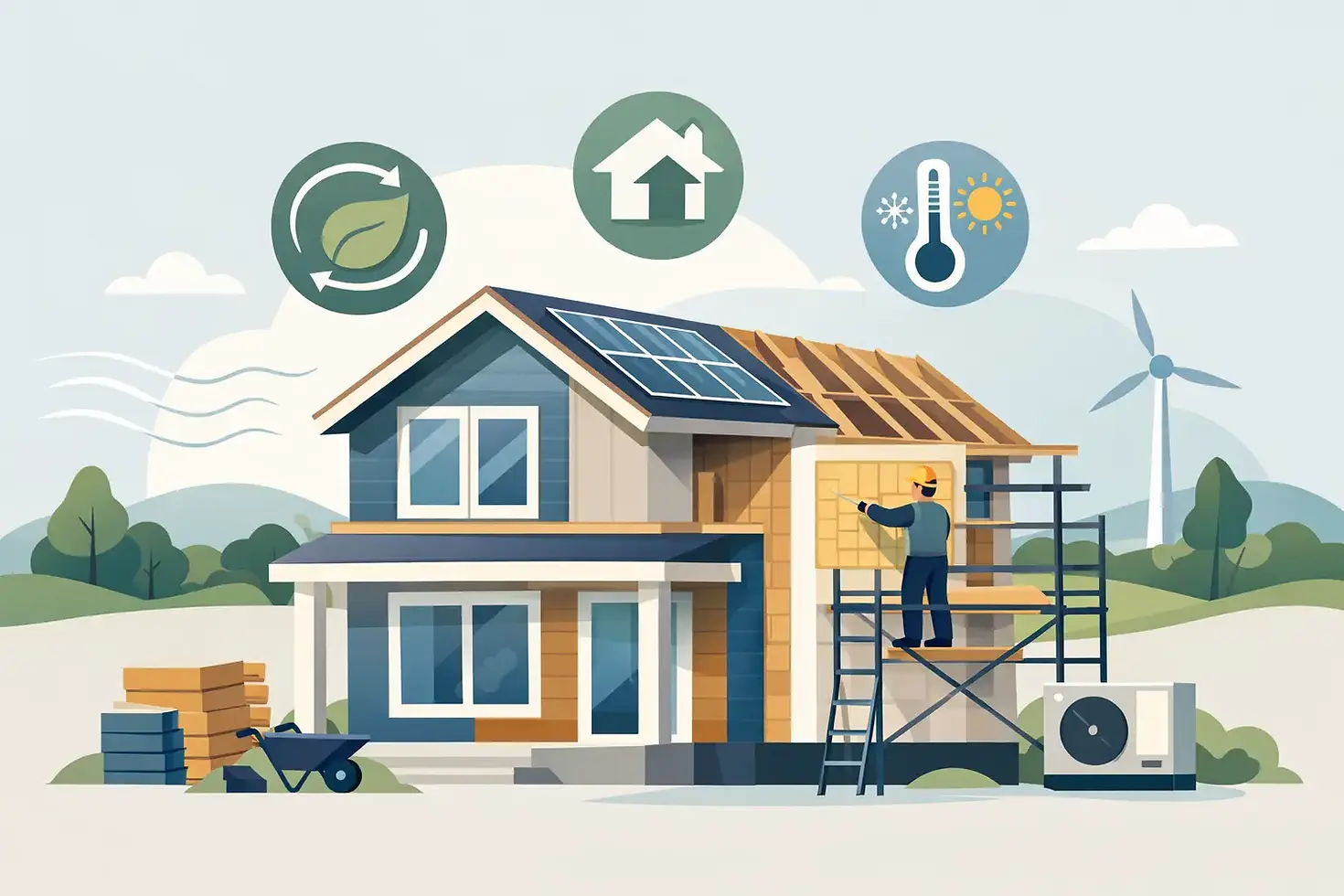
Visionary Building Services LLC delivers high-performance building envelopes across Texas and Oklahoma.
Airtight Construction Standards
Air leakage through the building envelope is responsible for a significant portion of energy loss in most buildings. Uncontrolled air movement carries heat, moisture, and pollutants through the enclosure in ways that insulation alone cannot address.
Our construction team uses blower door testing to verify envelope airtightness and identify any leakage paths before finishes are applied. This quality control step ensures that the performance we design is the performance you get - not a theoretical value that erodes in the field.
Even a well-insulated building can underperform if uncontrolled air movement is not addressed. Airtight construction, combined with controlled mechanical ventilation, produces a building that is both energy-efficient and healthy for occupants.
Thermal Bridge Management
Thermal bridges - areas where heat conducts through the envelope without interruption - undermine insulation performance. Structural elements, attachment systems, and framing members that bypass insulation layers allow heat to move through the assembly in ways that reduce overall performance and can create condensation risks at cold surfaces.
Our design process identifies and eliminates thermal bridges through continuous insulation strategies, structural thermal breaks, and careful detailing at penetrations, windows, and transitions. This is especially important in high-performance projects where the margin for error is smaller and the investment in quality insulation needs to be protected by equally careful structural detailing.
Moisture Control
In the Texas climate, moisture management is as important as thermal performance. Moisture management failures often stay hidden until they become expensive. Water intrusion, condensation within assemblies, mold risk, and material degradation can all stem from decisions that looked minor on paper.
Our building envelope designs incorporate drainage planes, vapor control layers appropriate to the climate zone, and durable exterior cladding systems that protect the structure from bulk water intrusion and vapor diffusion. Assemblies are designed for the way they actually dry, the way vapor moves in that climate, and the way materials interact over time.
A wall detail that performs well in one region can become problematic in another. Our Texas and Oklahoma experience means we design for real environmental stress - heat, humidity, wind, and severe weather - rather than ideal conditions.
Window and Door Performance
Windows and doors are the weakest links in most building envelopes. We specify high-performance glazing and frame systems appropriate to Texas climate conditions, balancing solar heat gain, visible light transmission, and U-value to optimize year-round comfort and energy performance.
High-quality windows can still create problems if they are not integrated with the air and water barrier. Transitions are where many failures begin - window perimeters, foundation connections, expansion joints, and penetrations all demand precision. These are not secondary details. They are where design intent either becomes durable performance or turns into future remediation.
Envelope Performance for Texas and Oklahoma
Serving Burkburnett, Wichita County, and the broader Texas and Oklahoma region, our building envelope design services are calibrated for local climate conditions. We understand how Texas heat, humidity, and wind affect building performance and design accordingly.
For owners, developers, and residential clients planning a new project, the envelope is not a finish decision. It is a performance decision. It affects operating costs, indoor comfort, durability, maintenance exposure, and the useful life of the building itself. When the envelope is designed with precision early, it reduces downstream risk.
Future-ready construction depends on durable assemblies, efficient thermal control, moisture resilience, and better integration between enclosure and mechanical design. Buildings that meet those standards are better positioned to deliver value in a market that increasingly rewards efficiency, longevity, and operational stability.
Key Insight
The right strategy fits the building, the budget, and the long-term goals of the owner.
Performance-focused design is not about excess. It is about choosing the right level of enclosure performance for the project and executing it correctly. If you are planning a commercial facility, development project, or custom home, start by asking how the building will perform ten years after completion - not just how it will look on opening day. That question usually leads straight back to the envelope, where lasting quality begins.