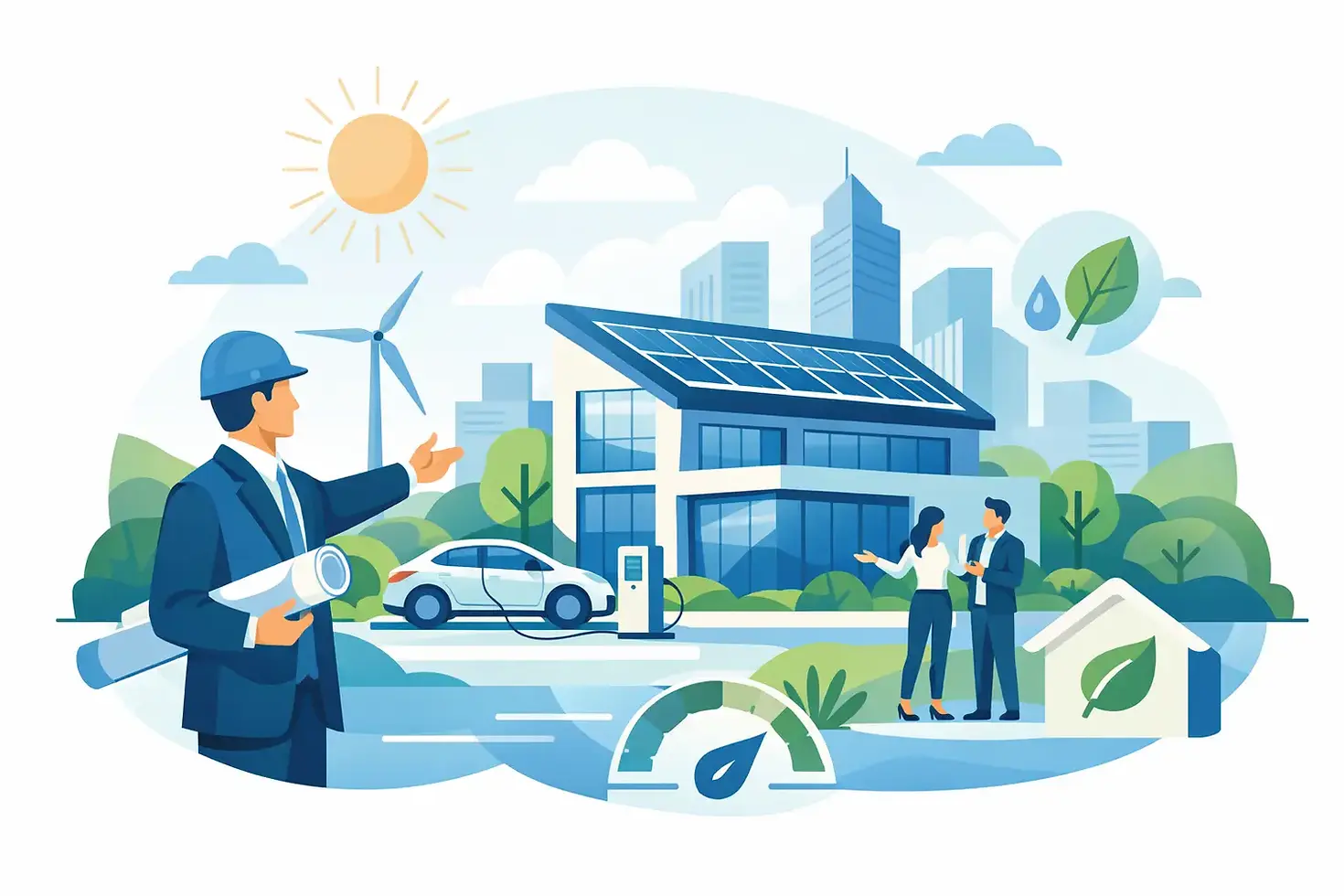
A building that looks impressive on day one but underperforms for the next 20 years is not a successful project. High performance building design is about aligning architecture, engineering, construction, and operations so the finished building works as hard as it should - with lower energy demand, stronger durability, better comfort, and fewer costly surprises over time.
For owners and developers in Texas and Oklahoma, that standard matters even more. Long cooling seasons, humidity swings, severe weather exposure, and rising operating costs put real pressure on every design decision. In that environment, performance is not an upgrade added late in the process. It is a discipline that has to shape the project from the beginning.
What High Performance Building Design Really Means
The term gets used loosely, but the meaning should be precise. High performance building design is the practice of creating buildings that deliver measurable results across the areas that matter most: energy efficiency, occupant comfort, indoor air quality, resilience, maintainability, and lifecycle value.
That does not mean chasing every new product or treating sustainability as a branding exercise. It means designing a building as a coordinated system. The envelope, structure, mechanical systems, lighting, controls, and interior conditions all affect each other. When those elements are handled in isolation, performance gaps appear. When they are designed together, the building operates with far greater consistency.
A highly efficient HVAC system cannot overcome a weak envelope. Premium glazing alone will not fix poor orientation or uncontrolled air leakage. Smart controls do not deliver much value if the underlying equipment was selected without a clear operating strategy. True performance comes from integration, not from stacking features.
Six Pillars of High Performance
30 to 60 percent reductions in energy use compared to conventionally built structures, achieved through coordinated envelope and mechanical design.
Consistent temperatures, no hot or cold spots, no drafts, and no humidity problems - maintained through airtight construction and right-sized systems.
Controlled ventilation delivers fresh air where it is needed, filtered and conditioned, rather than leaking in randomly through envelope gaps.
Superior moisture management, durable materials, and robust structural systems protect your investment over decades against Texas heat, humidity, and severe weather.
Lower utility expense, fewer comfort issues, longer system life, reduced maintenance, and stronger asset value - measured over the full life of the building.
Buildings designed for operational stability and resilience, engineered to endure demanding climates and competitive markets for the next 30 years.
Beyond Code Compliance
High-performance building design goes far beyond meeting minimum code requirements. It is a systematic approach to creating structures that deliver measurable outcomes: lower energy bills, superior comfort, better indoor air quality, and longer service life. For property owners in Burkburnett, Texas, this translates directly into long-term value. Code compliance is not the same as high performance - it is only the floor, not the ceiling.
Why Early Decisions Shape Long-Term Results
The most expensive performance problems are often set in motion before construction begins. Massing, orientation, window-to-wall ratio, shading strategy, insulation continuity, ventilation approach, and equipment zoning all influence how the building will behave for decades.
This is why early coordination matters. In a fragmented delivery model, architects, engineers, consultants, and contractors can each optimize for their own scope while missing the larger objective. The result may still meet code, but performance requires disciplined prioritization, not assumptions.
In a design-build environment, the project team can evaluate constructability, system interaction, and cost implications while design choices are still flexible. That changes the quality of decision-making. It allows owners to invest where performance returns are meaningful and avoid spending money on upgrades that sound impressive but do little in practice.
Performance is not an upgrade added late in the process. It is a discipline that has to shape the project from the beginning.
The Building Envelope Sets the Standard
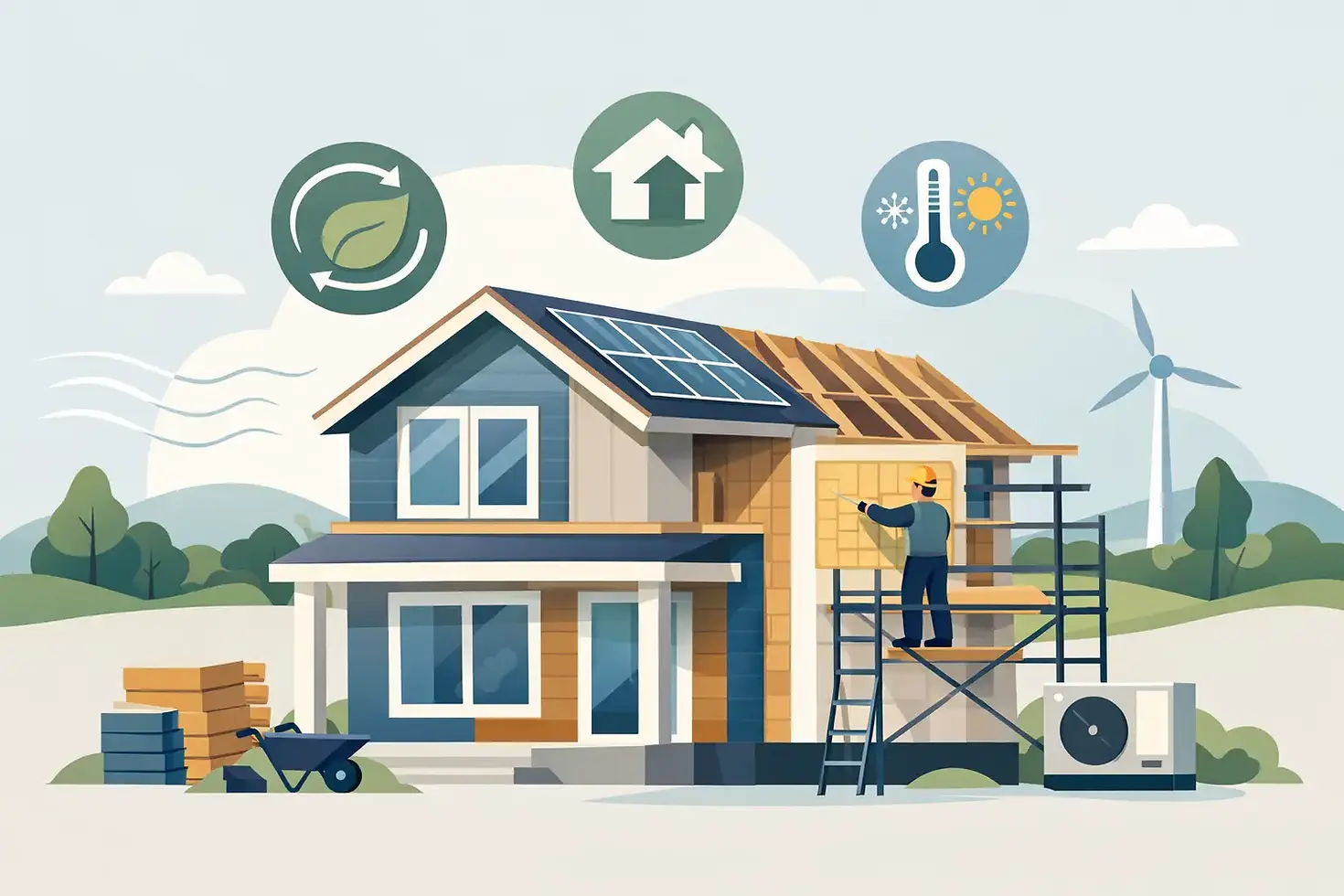
If there is one place where high performance is won or lost, it is the building envelope. Roof assemblies, wall systems, glazing, air barriers, moisture management, and thermal continuity determine how much unwanted heat, air, and water enter the building.
In Texas and Oklahoma, this is especially critical. Heat gain, humidity, wind-driven rain, and intense sun exposure can place continuous stress on the enclosure. If the envelope is underdesigned or poorly executed, the consequences show up quickly: unstable indoor temperatures, overworked HVAC equipment, moisture problems, occupant complaints, and escalating operating costs.
A high-performing envelope does more than reduce energy use. It protects the structure, stabilizes interior conditions, and supports the mechanical system instead of fighting against it. That translates into better comfort and better durability.
The trade-off is that envelope quality requires precision. Material selection matters, but detailing and installation matter just as much. A sophisticated wall assembly can still fail if transitions, penetrations, and sequencing are not tightly managed in the field. Owners who want lasting performance should pay close attention not only to what is specified, but to how execution will be controlled.
Comfort That You Can Feel
A high-performance building maintains consistent temperatures throughout all spaces. There are no hot or cold spots, no drafts, and no humidity problems. This is achieved through a combination of airtight construction, high-performance insulation, and precisely designed mechanical systems - all coordinated from the design phase. The result is not just a more pleasant environment; it is a building that actively supports the people inside it.
Mechanical Systems: Right-Sized and Coordinated
Mechanical performance is another area where projects often drift off course. Oversized systems are common, and they can create as many problems as undersized ones. An oversized system may short cycle, control humidity poorly, waste energy, and increase wear on equipment.
High performance building design treats HVAC as part of a broader environmental strategy. The load should be reduced first through orientation, envelope design, glazing choices, lighting efficiency, and air sealing. Then the mechanical system can be sized to match the real demand.
This approach improves more than utility bills. It can create quieter interiors, more stable comfort, and better air quality control. In commercial settings, that supports productivity and tenant satisfaction. In residential settings, it supports healthier, more comfortable living conditions. Controls are also part of the equation - complexity without clarity tends to become a maintenance problem later.
Energy Performance You Can Measure
High-performance buildings routinely achieve 30 to 60 percent reductions in energy use compared to conventionally built structures. Our Carbonless.org methodology guides design decisions that compound these savings: better envelopes reduce HVAC loads, which allows smaller equipment, which reduces capital cost and operating cost simultaneously. Performance is not a single feature - it is a chain of coordinated decisions that reinforce each other.
Durability and Longevity
Energy efficiency gets most of the attention, but durability is what protects the investment. A building that saves energy but suffers early material failure, recurring moisture issues, or maintenance-heavy systems is not truly high performing.
Buildings designed and built to high-performance standards last longer with less maintenance. Superior moisture management, durable materials, and robust structural systems protect your investment over decades. In the Texas climate, this durability pays particular dividends against heat, humidity, and severe weather. Assemblies need to be selected not just for laboratory performance, but for the climate, use case, and maintenance capacity of the owner.
Indoor Air Quality
Airtight construction combined with controlled ventilation creates superior indoor air quality. Fresh air is delivered where it is needed, filtered and conditioned, rather than leaking in randomly through gaps in the building envelope. Occupants in our buildings breathe cleaner air. In commercial settings, that supports productivity and tenant satisfaction. In residential settings, it supports healthier, more comfortable living conditions for families.
Measuring Success Beyond First Cost
Owners are often told that high-performance features cost more. Sometimes they do. But first cost alone is an incomplete metric.
The better question is what the owner receives in return: lower utility expense, fewer comfort issues, better occupancy performance, longer system life, reduced maintenance, and stronger asset value. In many cases, the most expensive path is not building well - it is correcting preventable deficiencies later.
High performance does not require pursuing every possible enhancement. It requires selecting the improvements with the strongest long-term impact. The right strategy is rarely about excess. It is about precision.
What Owners Should Ask Before Moving Forward
The quality of the outcome often depends on the quality of the questions asked early. Owners should understand how the team defines performance, how envelope and mechanical decisions will be coordinated, what modeling or analysis will inform design, and how field execution will be verified.
They should also ask who is accountable when design intent meets construction reality. Buildings do not underperform because teams lacked good intentions. They underperform because coordination broke down, details were diluted, or critical systems were never validated after installation.
A serious high-performance strategy includes design discipline, construction oversight, and post-installation verification. Without all three, the project risks becoming high-performance in concept only.
The Visionary Approach in Texas
From Burkburnett and Wichita County to communities across Texas and Oklahoma, our team delivers high-performance building design that makes a real difference. Three decades of design-build mastery, utilizing carbonless materials and low-carbon methods for high-performance builds.
Visionary Building Services LLC approaches projects with that level of accountability because long-term performance is created through coordination, not handoffs. We are Powered by Carbonless.org methodology for low-carbon, high-performance buildings.
From the first sketch to the final handshake, we provide a full suite of building solutions centered on high performance. That integrated approach is not a marketing claim. It is the structure of how we work, and it is what makes the difference between a building that performs on paper and one that performs in practice.
Building for the Next 30 Years
The strongest projects are not designed for immediate appearance alone. They are designed for operational stability, resilience, and value over time. That is the real promise of high performance building design. It gives owners more control over how a building behaves, what it costs to operate, and how well it endures.
For clients planning commercial facilities, investment properties, or custom homes, that level of foresight is no longer niche. It is a practical standard for building responsibly in demanding climates and competitive markets. When design, engineering, and construction work in full alignment, the result is not just a better building on paper. It is a building that continues to prove its worth long after completion.
The best time to protect building performance is before the first wall goes up. That is where disciplined planning becomes a lasting advantage.